Which Best Describes Okazaki Fragments in Dna Replication
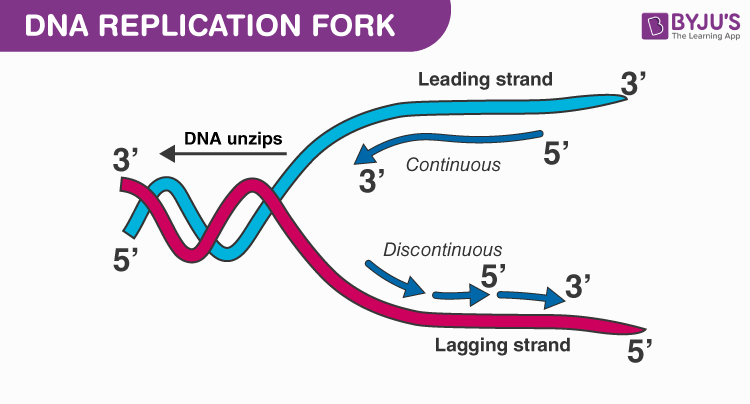
The leading strand is built continuously and the lagging strand is built in pieces. In the 3 to 5 or 5 to 3 direction D.
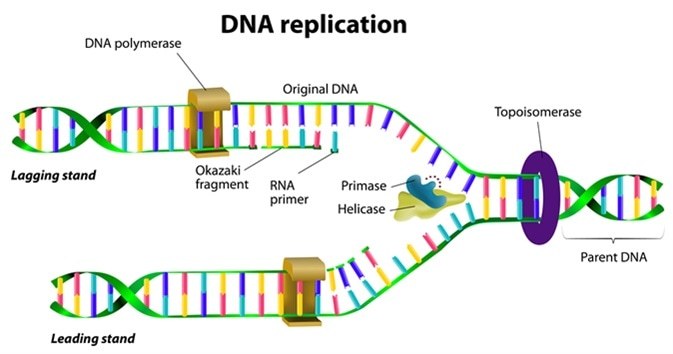
Dna Replication Science Quizizz
This statement is correct.

. The replication of DNA never takes place with 100 accuracy. B It joins together the Okazaki fragments produced from the lagging strand. The lagging strand of the DNA can be described as the strand that forms in the direction of 3-5.
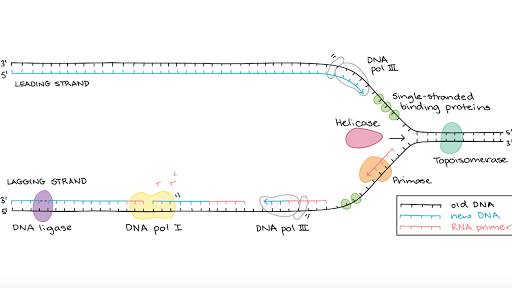
Since the primers are made up of RNA they will have to be replaced by DNA bases. Okazaki fragments remain in the DNA. DNA polymerase III and primase.
Question 8 1 point Which of the following is NOT a function of any DNA polymerase during replication. To do this process Ligase fills in the gaps in between the Okazaki Fragments. Try to include as many relevant proteins and concepts as possible to help demonstrate an understanding eg.
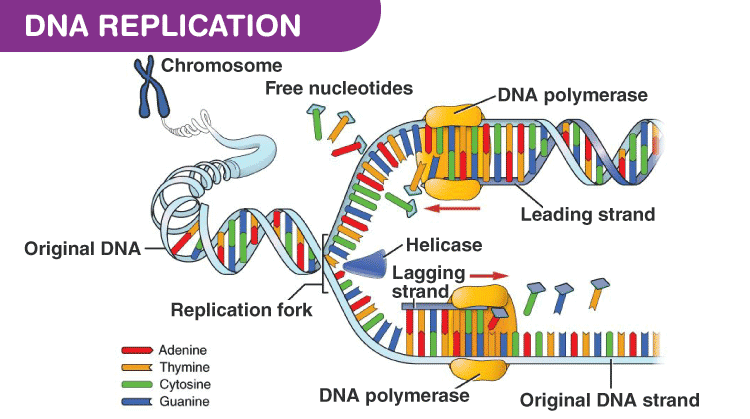
DNA replication is the process by which a double-stranded DNA molecule is copied to produce two identical DNA moleculesReplication is an essential process because whenever a cell divides the two new daughter cells must contain the same genetic information or. Lagging strand synthesis occurs in the same direction as the replication fork. D It unwinds the DNA double helix.
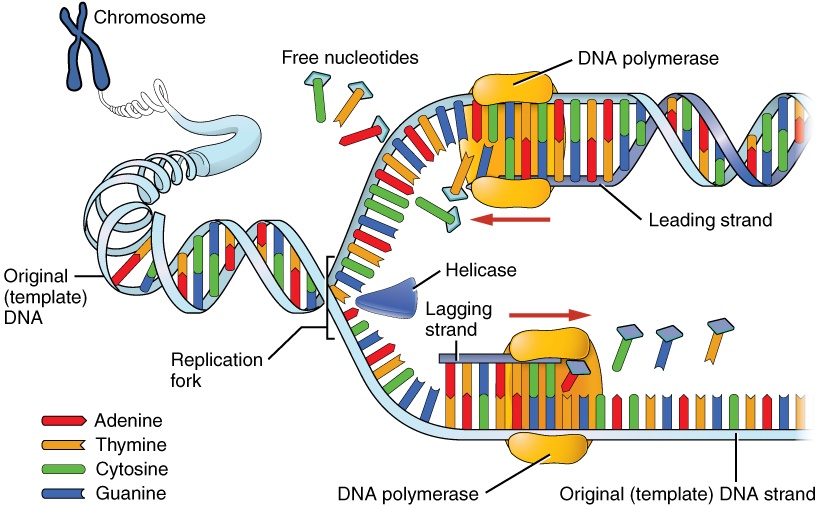
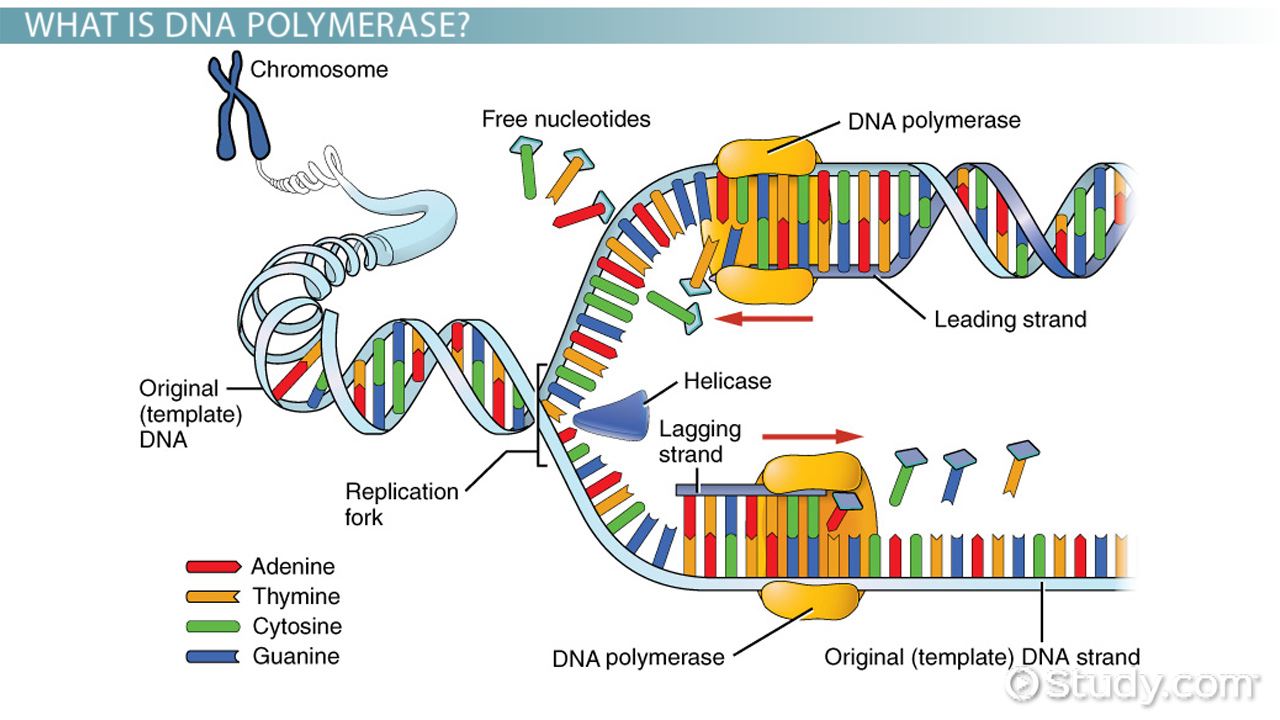
Up to 24 cash back On the lagging strand there are portions of synthesized DNA. Okazaki fragment A short segment of DNA synthesized on a template strand during DNA replication. DNA polymerase is an enzyme that builds new strands of DNA.
Which of the following best describes the direction in which lagging strands are added. Leading strand synthesis occurs continuously. As 5 to 3 Okazaki fragments in an overall 3 to 5 direction only B.
C It adds nucleotide bases to the newly synthesized DNA strand. 53 uterus counterclockwise In DNA replication which of the following events happens during leading strand synthesis but not during lagging strand synthesis. DNA polymerase is an enzyme that builds new strands of DNA.
The copying of double stranded DNA 2. A It helps keep the DNA strands separated after the replication fork. 1 The leading strand towards replication fork.
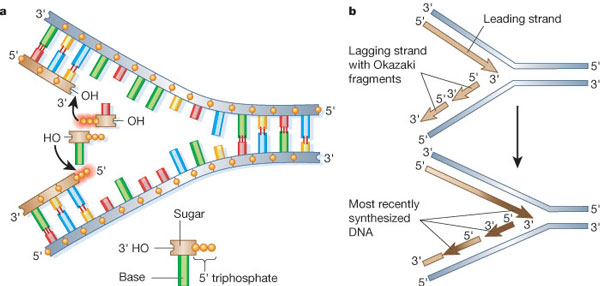
These portions are called Okazaki Fragments. Okazaki fragments are short sequences of DNA nucleotides which are synthesized discontinuously and. At DNA replication forks the overall growth of the antiparallel two daughter DNA chains appears to occur 5-to-3 direction in the leading-strand and 3-to-5 direction in the lagging-strand using enzyme system only able to elongate 5-to-3 direction and I describe in this review how we have analyzed and proved the lagging strand multistep synthesis reactions called.
DNA polymerase III and helicase. DNA polymerase I and ligase. The translation of a DNA molecule into a complementary strand of RNA.
Biology Assignment Help Describes why okazaki fragments are not observed in pcr Which of the following best describes why Okazaki fragments are not observed in PCR. It does this by adding DNA. Therefore Okazaki fragments are complementary to the lagging strand which runs in the 5 to 3 direction.
2 The lagging strand towards replication fork. This means that one strand has a series of breaks in the sequence. Also plays a key role in repairing single stranded breaks in duplex DNA in living organism.
Removes DNA polymerase once replication is complete Incorporates short sequences of common base pairs in transcription O Extends the lagging strand in DNA replication Speeds. Which of the following diagrams best represents leading strand and Okazaki fragment synthesis at a replication fork. During DNA replication Okazaki fragments are used to enlongate.
By gluing them together with phosphodiester bonds between the phosphate. DNA primase is used for the entire reaction therefore eliminating the production of Okazaki fragments that normally result from the activity of DNA polymerase. It does this by adding DNA nucleotides one at a time.
This experiment revealed the transient existence of pieces of DNA that were 10002000 nucleotides long now commonly known as Okazaki fragments at the growing replication fork. 4 The lagging strand away from the replication fork. DNA Helicase Okazaki Fragments etc.
They form short double-stranded DNA sections that lie between 1000 and 2000 nucleotides in prokaryotes. Which pair of enzymes removes the RNA primer and seals the DNA nicks. Okazaki fragment is a short newly-synthesized DNA fragment on the lagging template strand formed during DNA replication.
Which statement best describes DNA replication. The DNA polymerases II and III. Describe the process of DNA replication as if explaining it to a fellow classmate.
As 5 to 3 Okazaki fragments in an overall 5 to 3 direction only C. A Ligase b Helicase c DNA polymerase. 13 Which of the following best describes the function of DNA ligase.
View Week 12 learning assessmentdocx from CHM 5600 at Wayne State University. During DNA replication new nucleotides are added at the 3 end of the molecule. 3 The leading strand away from replication fork.
DNA ligase is a specific type of enzyme that facilitates joining of DNA strands together by catalyzing formation of a phosphodiester bond. Which statement best describes. Since this direction is opposite to the direction of the replication fork hence the lagging strand is not formed continuously.
What answer best describes the function of Okazaki fragments. A removing RNA primers Ob closing up the nicks between Okazaki fragments O c proofreading and correction d synthesizing in the 5 to 3 direction 3 Question 9 1 point Which of the following best describes the three-dimensional structure of. 4 The lagging strand away from the replication fork.
It is formed in fragments which are known as the Okazaki fragments. Many Okazaki fragments make up the lagging strand of newly synthesized DNA. During DNA replication the lagging strand is complemented with Okazaki fragments that still contain the RNA primer.
The number of DNA molecules is doubled with every other replication. Similar replication intermediates were later found in eucaryotes where they are only 100200 nucleotides long. Which of the following best describes semiconservative replication.
Imagine there is an unlabelled diagram in front of you to guide your explanation. Which statement best describes strand characteristics as it relates to DNA replication. A DNA molecule consists of one parental strand and one new strand.

Lesson Explainer Dna Replication Nagwa
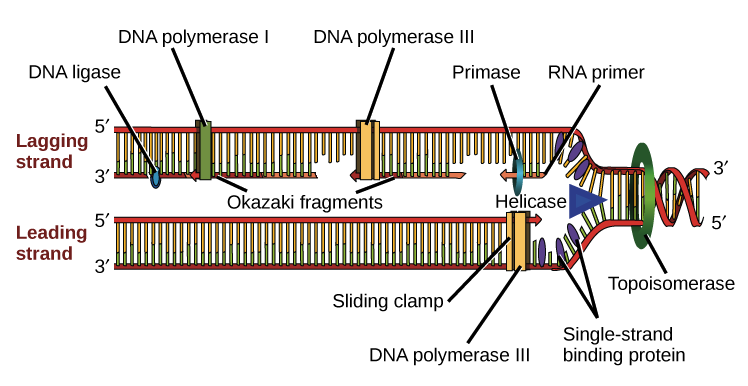
Molecular Mechanism Of Dna Replication Article Khan Academy

What Are The Steps Of Dna Replication

Okazaki Fragments An Overview Sciencedirect Topics

How Is Dna Replicated Mbinfo

Lesson Explainer Dna Replication Nagwa
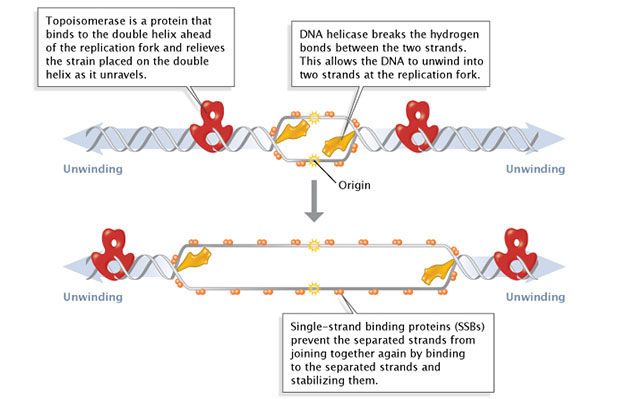
Molecular Events Of Dna Replication Learn Science At Scitable
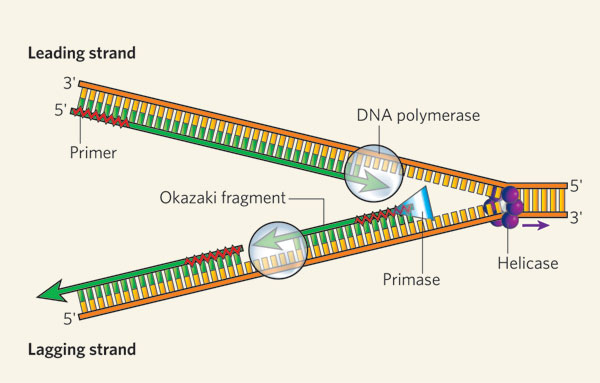
Dna Replication Of The Leading And Lagging Strand Learn Science At Scitable

Dna Replication Wikiwand
Why Okazaki Fragments Are Formed Byju S Neet
Molecular Mechanism Of Dna Replication Article Khan Academy
Dna Replication Structure Stages Of Replication Teachmephyiology

Dna Replication Substrates And Experimental Schemes A Dna Substrates Download Scientific Diagram

Dna Replication Leading Strand Vs Lagging Strand Okazaki Fragments Youtube
How Many Stages Are There In Dna Replication Byju S Neet
Dna Replication Wikiwand
Dna Replication Genetics Quizizz
Topic 2 7 Dna Replication Transcription And Translation Amazing World Of Science With Mr Green
Dna Replication S Phase Checkpoint Control Learn Science At Scitable

Comments
Post a Comment